Siding Inspection Services in South Charleston South Charleston, WV: What to Expect and Why It Matters
Most homeowners think of a siding inspection as a quick visual scan: someone walks around the house, looks for obvious cracks or missing panels, and tells you everything looks fine. A professional siding inspection is a fundamentally different exercise. It is a systematic diagnostic process that evaluates every component of your exterior cladding system, from the surface finish down to the substrate and framing connections behind the panels. When done correctly, it uncovers problems that will never be visible from the street, problems that can silently worsen for years before they become apparent, and expensive, damage.
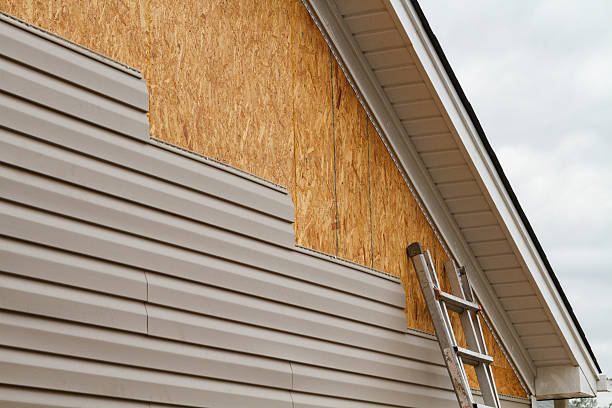
One of the most important capabilities a professional inspector brings is the ability to identify moisture infiltration behind siding panels. Water does not need a large gap to enter a wall assembly: a failed caulk bead at a window corner, a popped fastener that has backed out slightly, or a compromised flashing at a roof-wall junction can allow enough moisture intrusion to saturate insulation, promote mold growth, and begin breaking down wood sheathing over a matter of months. A trained inspector uses calibrated moisture meters to read panel substrates and surrounding materials, comparing readings across multiple points to identify patterns that indicate active moisture movement. Surface appearance tells only part of the story; the moisture meter readings tell the rest.
A written siding inspection report is not just a formality. It is a document that serves specific functional purposes. For homebuyers in South Charleston, it provides an independent assessment of what they are purchasing and supporting documentation for price renegotiation if significant problems are found. For sellers, it demonstrates good faith disclosure and reduces the likelihood of post-sale disputes. For homeowners dealing with insurance claims, a professionally prepared inspection report with photographs and moisture readings provides the structured evidence that claims adjusters require to process storm damage or water infiltration claims efficiently. The report you receive from a qualified siding inspector is a permanent record of your property's condition at a specific point in time, which has value in multiple future scenarios.
In South Charleston, WV specifically, siding inspection is not optional maintenance; it is smart property management given the climate. South Charleston, WV's weather patterns place significant demands on exterior cladding systems. Temperature swings cause expansion and contraction cycles that stress fasteners and sealants over time. Seasonal moisture variation tests the ability of panels and flashings to manage water movement. Wind-driven precipitation events can force water into seemingly sealed gaps. The particular stresses that South Charleston, WV's climate places on siding mean that problems develop faster here than in more temperate regions, and the cost difference between catching a moisture infiltration issue early versus after it has reached the wall framing can be measured in thousands of dollars.
How often your siding should be professionally inspected depends largely on the material. Vinyl siding, which is generally more resistant to moisture and rot, benefits from a professional inspection every three to five years under normal conditions, with additional assessments after any significant weather event. Wood and wood composite sidings are more vulnerable to moisture damage and should be inspected annually given that the consequences of undetected moisture infiltration are faster and more severe with organic materials. Fiber cement siding falls between the two, generally warranting inspection every two to three years, with particular attention to paint adhesion, caulking integrity, and any areas where the material may have absorbed water at cut edges or fastener points.
The connection between siding condition and energy efficiency is direct and measurable. Siding systems do more than protect against weather: they are part of your home's thermal envelope. When panels are loose, separated, or harboring moisture in the insulation layer beneath them, your heating and cooling system compensates for the air and heat exchange occurring at those failure points. Homeowners who have corrected siding deficiencies frequently report meaningful reductions in monthly utility costs afterward. An inspection that identifies these efficiency losses gives you both a financial justification for repair and a baseline for measuring the improvement after work is completed.
After your siding inspection in South Charleston is complete, you will receive a prioritized repair recommendation list, not a pressure sales pitch. The findings are ranked by urgency: immediate safety or structural concerns, active moisture issues requiring prompt attention, deterioration that can be monitored for a season before acting, and general maintenance items to address during your next exterior project cycle. This structure helps you make informed decisions about where to direct your repair budget and in what sequence, rather than feeling pressured to address everything at once. The inspection's job is to give you information. What you do with it is entirely your decision.